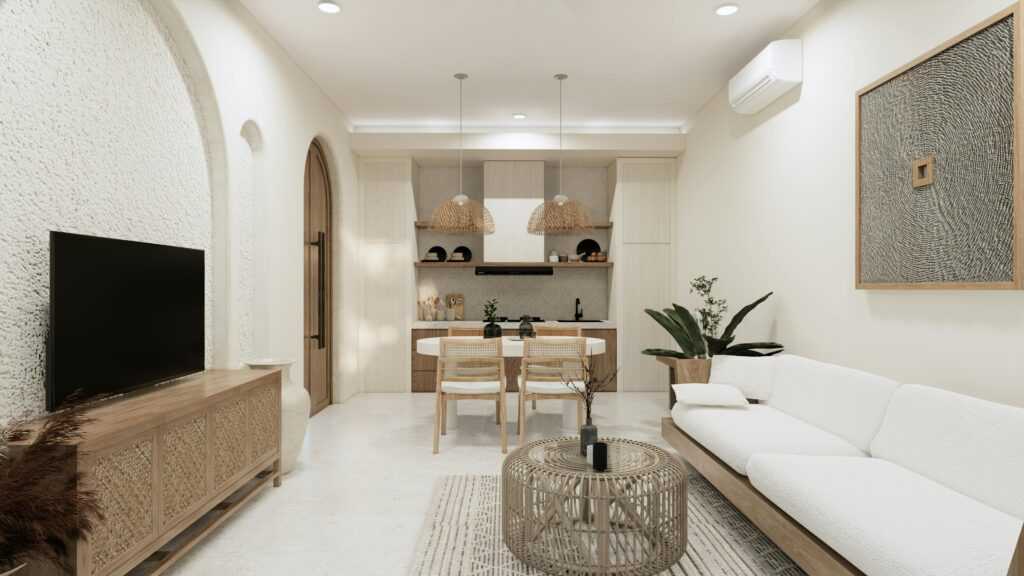
A new villa in Bali creates a distinctive design challenge. The island’s climate shapes how furniture behaves, how long it lasts, and how well it supports daily living. High humidity, steady heat, and salt air near the coastline all affect materials differently. Owners often discover that furniture imported from Europe, North America, or Australia responds poorly to the tropical ecosystem. Understanding these environmental factors becomes the first step in choosing furniture that fits a Bali villa rather than fighting against the conditions.
The island’s open architecture also plays a central role. Many villas rely on wide sliding doors, outdoor gardens that merge with indoor areas, and shaded living zones instead of fully enclosed rooms. Indoor and outdoor spaces often blend into one experience. As a result, furniture must withstand constant shifts in temperature, light, and airflow. It cannot behave like furniture in sealed apartments or controlled environments. Pieces must remain stable when exposed to warm air during the day and cooler cross breezes at night.
Moisture contributes to another challenge. Humidity encourages mold, mildew, and swelling in wood that lacks natural oils or proper treatment. Fabrics absorb moisture easily, which leads to odors and dark spots when materials are not prepared for the climate. UV exposure adds an additional pressure on outdoor pieces. Sunlight lifts colors, weakens fibers, and causes cracks in plastics that are not rated for the tropics. Villa owners often learn that long term durability depends on choosing materials that thrive under Bali conditions rather than survive them.
Insects also influence the decision making process. Bali has termites that feed on wood and pests that hide inside untreated furniture. Imported hardwoods without protective oils or local treatment stand at high risk. Quality matters more than visual appeal when dealing with these concerns. Hardwoods from outside Southeast Asia sometimes carry vulnerabilities that become clear only after the first rainy season.
Weight and movement also matter within Bali architecture. Large furniture often suits the wide rooms and open ceilings, yet oversized pieces can obstruct airflow, block sliding doors, or disrupt natural circulation. On the other hand, very light furniture may shift during strong breezes or feel too fragile for daily island living. Finding a balance between sturdiness and proportion becomes an important part of the planning process.
A Bali villa also reflects a lifestyle that balances relaxation and hospitality. Residents host friends, hold outdoor dinners, use the pool area frequently, and enjoy shaded terraces during the afternoon. Furniture must support this social rhythm. Seating, lounging areas, and dining spaces must all function well in both casual and formal moments. The home becomes a space of gathering, rest, and ongoing movement, so furniture must serve multiple roles without feeling heavy or excessive.
Understanding the relationship between climate, architecture, and lifestyle sets a strong foundation for selecting the right materials and pieces for a Bali villa. Once these environmental demands are clear, choosing the right furniture becomes far easier.
Core Materials That Thrive in Bali’s Climate
Teak stands at the top of the list when selecting furniture for a Bali villa. Its natural oils protect it from termites, moisture, and decay. Teak handles year round humidity better than most woods, which is why it appears in traditional Balinese architecture. High quality teak ages into a soft patina that enriches outdoor and indoor spaces. For long dining tables, bed frames, wardrobes, and outdoor seating, teak remains the most reliable choice.
Rattan offers another dependable material. Local craftsmen weave rattan into chairs, sofas, lamps, and headboards. The material is light yet durable. It allows air to pass through, which helps reduce mold growth in humid environments. Rattan brings a natural island aesthetic that suits almost every villa design without feeling excessive. When sealed properly, rattan endures daily sun exposure on shaded terraces without significant wear.
Bamboo brings a sustainable and locally rooted option. It grows quickly, resists swelling, and contributes to the airy feel that defines Balinese interiors. Bamboo works well for beds, shelving, accent chairs, and decorative panels. It often pairs with rattan or teak to create a layered, natural look that matches the surrounding landscape.
Metal plays an essential role in outdoor furniture. Powder coated aluminum offers strength without rusting in salty wind. It remains light enough for easy movement when rearranging terraces or patios. Stainless steel also performs well. These metals work best in combination with teak or outdoor resistant fabrics. They provide structure and longevity without absorbing moisture.
Fabrics require careful selection. Outdoor cushions must use solution dyed acrylic or similar textiles that resist mold, fading, and moisture. Quick dry foam inside cushions prevents water retention, which would otherwise cause mildew after a rainy night. Natural cotton and untreated linen struggle with Bali humidity, so owners often choose blends designed for tropical environments.
Certain materials should be avoided in Bali. Soft woods like pine, rubberwood, and acacia often swell or crack in tropical conditions. Low grade iron rusts quickly. Faux leather breaks down under heat. Indoor only fabrics discolor and develop mold within months. Many imported items sold at low cost do not handle the climate and require frequent replacement. Choosing sturdy tropical friendly materials saves time, money, and frustration over the long term.
By selecting teak, rattan, bamboo, powder coated metals, and tropical grade fabrics, a villa owner builds a reliable foundation for each room. These materials maintain their structure, resist pests, and blend naturally with the Balinese atmosphere. They also support the visual harmony that many owners seek when designing their homes.
Essential Furniture Types for the Bali Villa Lifestyle
The living room sets the tone for the entire villa. Low teak sofas with thick cushions anchor the space. The low design supports natural airflow and reflects local seating traditions. Modular seating works well for open layouts because it allows easy rearrangement for guests or family gatherings. Woven lounge chairs made from rattan or bamboo soften the room and add texture. A solid teak coffee table brings stability and warmth to the center of the room.
The dining area often becomes the heart of the villa. A long teak dining table suits families, guests, and social dinners. Many villa owners prefer substantial pieces that complement wide rooms and high ceilings. Dining chairs with natural fiber seats create comfort without trapping moisture. For larger villas, two dining zones may appear, one inside and one outside. The outdoor dining set must use teak or powder coated metal to handle humidity and sun exposure.
Bedrooms require thoughtful design. Platform beds provide stability and create a grounded look. Many villas incorporate mosquito net frames into the bed structure for practical reasons. Under bed storage helps keep rooms organized while maintaining open floor space. Wardrobes should use teak or bamboo, with ventilation panels that support airflow and reduce moisture buildup. Drawers must glide smoothly even in humid conditions, which is why high quality hardwoods matter.
Outdoor spaces demand specific furniture. Pool loungers often use aluminum frames combined with quick dry cushions. Teak daybeds create a comfortable retreat near the pool or under a pergola. These pieces must resist direct sunlight, occasional rain, and constant warmth. Hammocks and hanging chairs add a relaxed island atmosphere. Outdoor dining sets need sturdy bases and mold resistant fabrics. Covered terraces become natural living rooms, so owners often choose rattan sofas that withstand humidity while maintaining comfort.
Kitchen and bar areas depend on efficient furniture choices. Breakfast bar seating works well in villas with compact kitchens. Teak or rattan stools blend simplicity with resilience. Larger villas may include outdoor bars near the pool. Powder coated aluminum stools or weather ready teak stools serve well in these areas. In some villas, owners incorporate commercial bar stools for a bolder and more structured look.
Workspaces and relaxation zones require tailored furniture. Compact teak desks withstand humidity and support daily use. A rattan reading chair and small side table create a quiet corner for reading or journaling. Some villas include yoga or meditation areas that benefit from bamboo benches or low teak stools. Furniture in these spaces must support calm routines without feeling heavy.
Each category of furniture plays a role in creating a villa that feels comfortable, functional, and visually connected to the island. When paired with the right materials, these pieces remain strong and attractive for years.
Choosing the Right Sizes and Proportions for Open Balinese Layouts
Proportion shapes the flow and comfort of a Bali villa. Wide rooms and tall ceilings require furniture with presence, yet overly massive pieces disrupt the openness that defines island living. Finding the right scale depends on understanding the balance between structure and airiness within each room.
In living rooms with open plans, larger sofas often look better than several small chairs. A deep seating sofa made from teak provides visual weight without crowding the space. Owners should measure the distance between sliding doors and walls to avoid blocking pathways. The sofa should allow easy movement toward the terrace and pool area. Coffee tables should allow enough space for circulation.
Dining tables must match the social rhythm of the villa. Many households entertain guests during long dinners. A table between two and three meters in length works well in most villas. Chairs must allow enough room for comfortable seating without pressing into walls or cabinetry. Outdoor dining tables can follow similar dimensions if the terrace offers enough space.
Bedrooms require careful proportioning. A king size platform bed often suits the scale of Balinese villas. The open area around the bed should allow airflow and natural movement. Too many side tables or cabinets may restrict circulation. A simple approach usually creates a better visual outcome. Wardrobes should remain tall enough to use the height of the room but not so wide that they dominate the bedroom.
Outdoor spaces benefit from thoughtful sizing. Pool loungers should allow space for walking between them. Daybeds work well when positioned under shade structures but can feel overpowering if placed in small corners. Owners should measure the terrace and choose furniture that fills the space without crowding it.
Clearance between furniture supports comfort and ease of use. Pathways to sliding doors must stay open. Chairs should not obstruct walking areas. Dining chairs need room to pull back without hitting other objects. Outdoor seating should align with natural flow toward the pool, garden, or lounge area.
Choosing the right size for each piece brings harmony to the villa. It strengthens the sense of openness while supporting daily activities. Proper proportion also improves visual balance and usability in every room.
Blending Local Aesthetics With Modern Comfort
A Bali villa often balances traditional craftsmanship with modern design. The island’s design heritage includes carved teak panels, woven rattan, bamboo screens, and organic shapes. Modern villas combine these elements with clean lines and neutral palettes to create spaces that feel current yet rooted in place.
Homeowners often use a neutral foundation to avoid visual overload. White walls, cream floors, and light stone surfaces support furniture made from teak and rattan without competing for attention. This approach highlights the natural grain of wood and the texture of woven materials. Subtle patterns and natural fibers create warmth without crowding the room.
Decorative elements should complement rather than dominate. A carved headboard adds depth to a bedroom without requiring additional ornamentation. Woven pendant lights create soft shadows and enhance the atmosphere. Local sculptures or hand carved pieces introduce personality, yet a few well chosen items often create a stronger effect than many small decorations.
Balinese gardens often become an extension of the interior. Large potted plants, vertical greenery, and natural stone planters connect indoor spaces with the outdoors. Furniture placed among these elements should support the natural flow rather than compete with it. Rattan and teak pair naturally with greenery because they share the same visual language.
Modern comfort also matters. Cushions must feel supportive but remain breathable. Textiles in neutral tones or muted greens fit well with the surrounding nature. Homeowners often choose a mix of organic materials and contemporary silhouettes, which creates a balanced aesthetic. For example, a modern teak sofa with straight lines may hold rattan cushions for texture. A sharp edged dining table may pair with woven dining chairs for contrast.
Sustainability plays a larger role in Bali furniture selection. Reclaimed teak presents a strong option. It offers durability and a rich patina from previous use in traditional buildings. Eco friendly finishes reduce chemical odors and resist humidity. Hand crafted rattan pieces produced locally reduce the environmental footprint while supporting local artisans.
This blend of local craftsmanship and contemporary comfort creates a villa that feels connected to the island while still supporting modern living. Homeowners gain the ability to personalize their spaces without losing sight of the region’s identity.
Practical Tips for Making Furniture Last in Bali
Proper care helps furniture withstand Bali’s climate. Teak furniture benefits from occasional oiling or sealing. This maintenance protects the surface and enriches the grain. Outdoor teak develops a silver tone over time. Many owners appreciate this natural shift, while others choose to apply oil to preserve the golden color.
Rattan needs regular cleaning to avoid dust buildup. A soft brush helps maintain the weaving. Small cracks may appear after long exposure to heat, so shaded placement extends the lifespan. If rattan pieces remain outdoors, owners should bring cushions inside during heavy rain or use protective covers.
Preventing mold requires attention to airflow. Owners often use dehumidifiers during extended wet seasons. Wardrobes with ventilation slats reduce mustiness. Furniture should not sit directly against walls where moisture accumulates most easily. Regular cleaning with mild solutions prevents odors and stains.
Termite protection becomes essential for wooden furniture. Many villas schedule yearly treatments. Teak naturally resists termites because of its oils, yet other woods require chemical or natural treatments. Bamboo benefits from heat treatment and sealing. Regular inspections help identify early signs of pests.
Outdoor cushions must dry quickly after rain. Quick dry foam prevents water retention. Covers made from solution dyed acrylic avoid fading and mold. Storing cushions during monsoon season extends their life. Outdoor furniture frames also benefit from occasional cleaning to remove salt from the air, especially near the coast.
Budgeting furniture for a Bali villa involves allocating resources wisely. Beds, sofas, outdoor teak, and wardrobes deserve higher investment due to constant use. Accent pieces, stools, and decorative items can come from local markets or craftsmen at lower prices. Choosing durable materials saves future replacement costs and offers a more stable interior.
Understanding the challenges of humidity, sunlight, insects, and coastal wind leads to better maintenance routines. A small amount of regular care keeps furniture performing well over many years. When paired with strong initial material choices, these practices support both beauty and longevity.