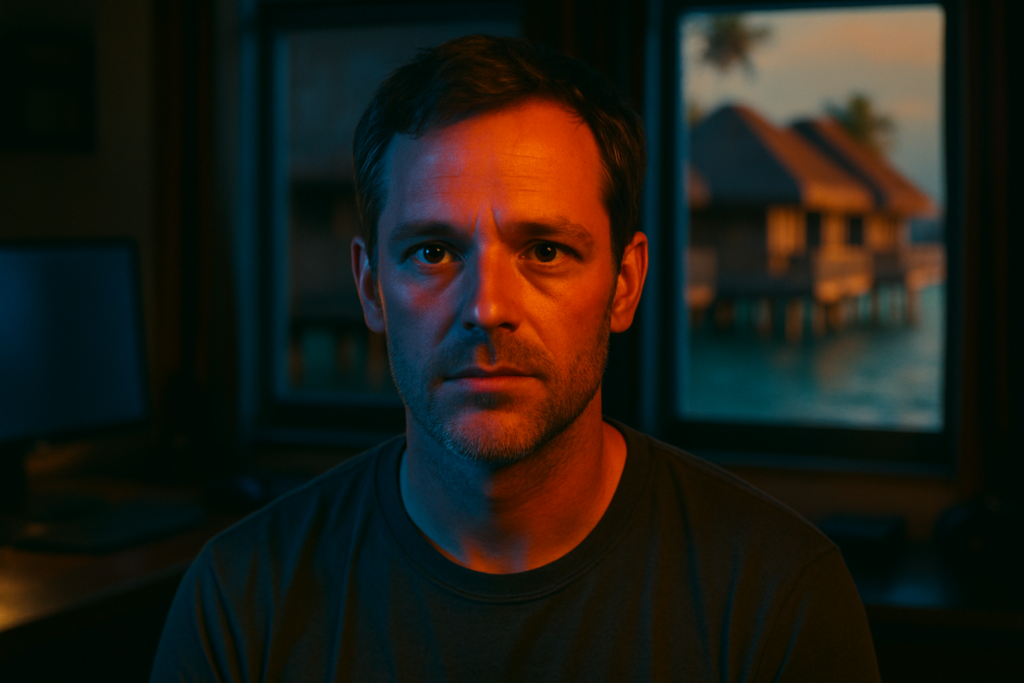
Barcelona as a global center for reproductive medicine for residents of tropical islands
Spain as a safe haven for women from Fiji, Bali, the Maldives, the Seychelles, and the Bahamas

In today’s world, many women living in paradise corners of the planet, such as Fiji, Bali, the Maldives, the Seychelles, and the Bahamas, face serious problems in accessing advanced reproductive medicine. Despite the natural beauty and relaxing atmosphere of these regions, the medical infrastructure there is often unable to offer the full range of complex procedures needed to combat infertility. Against this backdrop, Barcelona is confidently establishing itself as the top destination for those willing to cross oceans for high-quality, modern medical care.
The rapid growth in the flow of patients from tropical islands to Spain is due to several critical factors. First and foremost is the limited technological resources on the islands, which often lack laboratories for preimplantation genetic diagnosis ( IVF In vitro fertilization with PGD ) or egg donor banks. Women, regardless of their marital status, come to Barcelona for what they cannot get at home: advanced technology, personalized treatment, and humane legislation that opens the door to motherhood.
Limited opportunities for island medicine and the need for treatment in Europe
On many tropical islands, healthcare systems focus on basic care and emergency medicine, but highly specialized areas such as reproductive medicine are underdeveloped. The main problem is the lack of access to complex biotechnologies. For example, PGD-A requires expensive equipment and highly qualified geneticists, which are difficult to find in small island states.
In addition, in closed island communities, the issues of confidentiality and donation are acute. Due to the small population, it is virtually impossible to find an anonymous egg or sperm donor in the Seychelles or the Maldives without the risk of disclosure. This, along with the lack of a legal framework to protect the rights of ART patients, forces women to seek solutions thousands of kilometers from home, choosing Barcelona as the recognized capital of reproductive medicine.
Spain: a combination of competence and technological excellence
Spain rightfully occupies a leading position on the world map of reproductive tourism, attracting patients even from the most remote corners of the Pacific and Indian Oceans. This is facilitated by progressive legislation, which favourably distinguishes Spain from conservative or technologically limited regions.
Among the key advantages that make the long flight worthwhile is the free use of PGD-A. This makes it possible to test the embryo for genetic defects before transfer, which is critically important for patients with a history of unsuccessful attempts. The extensive and legally protected database of anonymous donors of all phenotypes plays a huge role. Thanks to Barcelona's cosmopolitanism, a patient from the Bahamas or Fiji can find a donor who is ethnically compatible, which would be extremely difficult to do in their home region.
Barcelona's clinics are ideally suited to the needs of foreign patients arriving from afar. The staff and coordinators provide full logistical support, understanding the complexity of traveling from the other side of the world. The highest success rates are achieved through the implementation of innovations such as incubators with artificial intelligence and continuous embryo development monitoring systems, which are often unavailable in clinics in island nations.
New quality standards and healthy embryo guarantee
For patients flying in from Bali or Fiji, the cost of failure is too high, so quality guarantees are paramount. Previously, clinics around the world simply offered a certain number of cells. However, today, leading centers in Barcelona, such as NatuVitro, are setting new standards.
Patients are guaranteed not just the availability of biological material, but also genetically healthy euploid embryos that have been tested using PGD-A. For a woman who has traveled thousands of miles, this means a significant reduction in uncertainty and a multiple increase in the chances of giving birth to a healthy child on the first attempt. This approach justifies the difficulties of a long flight, turning it into an investment in a guaranteed result.
Barcelona as a contrast and a new environment for recovery
A change of scenery plays an important psychological role. For residents of tropical islands accustomed to a measured pace of life, Barcelona offers the dynamic but comfortable environment of a European metropolis with a rich culture.
The geographical distance is compensated by the city's unique atmosphere. The unique combination of Gaudi's architecture, Mediterranean cuisine, and high level of service transforms a medical trip into a cultural enrichment. Women have the opportunity to escape the pressure of the closed society of their islands, enjoying the anonymity and freedom of the big city. This helps to reduce the psychological stress that often accompanies infertility treatment in small communities.
Long-distance travel logistics and patient care
Organizing treatment for patients from the Seychelles, Maldives, or Bahamas requires flawless logistics. Barcelona clinics provide services that simplify this process as much as possible. Patients are assisted with visa applications, document translations, and coordination with local gynecologists on the islands to carry out the preparatory stages of stimulation at home. Patients benefit from streamlined support in obtaining a Schengen visa, ensuring smooth travel arrangements for their medical journey to Barcelona.
Thanks to this, despite the distance, the number of visits to Barcelona is kept to a minimum. Usually, one or two visits are required. For standard IVF, this involves puncture and transfer, and for programs with donor eggs (IVF with egg donation, IVF with double donation), often only one visit is sufficient. A well-developed network of air connections through major hubs (Dubai, Singapore, London) makes Barcelona accessible even from Fiji or Bali with one or two transfers.
Cost-effectiveness compared to the US or Australia
For residents of the Bahamas or Pacific islands, the traditional destinations for medical treatment are often the US or Australia. However, Barcelona wins the competition thanks to its price-quality ratio.
In the US or Australia, the cost of an IVF cycle with PGD-A can be astronomical, reaching $30,000 – $40,000. In Spain, a similar program of the highest standard will cost between €6,000 and €8,000. Even taking into account the cost of complex flights and accommodation in Europe, the final amount is often half that of treatment in clinics in Miami or Sydney, while the quality of services in Barcelona is in no way inferior and often surpasses its competitors thanks to more favorable legislation.
Medicine without borders or cultural barriers
The intense flow of foreign patients has turned Barcelona into a veritable medical Babylon, where doctors have unique experience working with people of different cultures and genotypes. This has created an atmosphere of complete acceptance and understanding.
For a resident of the Maldives or Seychelles, a trip to Barcelona is a way to go beyond the limitations of their country. It is an opportunity to access global scientific achievements in an atmosphere of respect and care. Traveling for medical care ceases to be a problem and becomes a bridge to the future.
Barcelona as a place where dreams come true
The choice of Barcelona by residents of tropical islands is a conscious step towards motherhood, overcoming geographical boundaries. Here, high technology meets human warmth. For women who have not found answers to their questions at home, in the middle of the ocean, Barcelona becomes that place of strength where, despite the distance, new life is born.